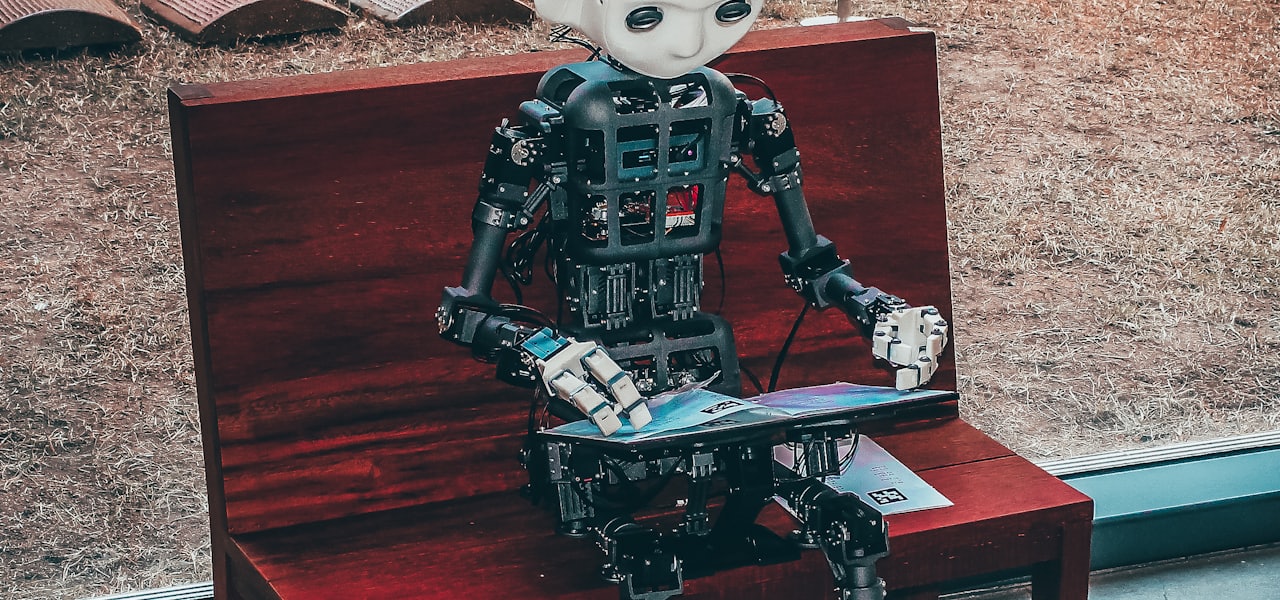
A supercomputer operating system is an operating system intended for supercomputers. Since the end of the 20th century, supercomputer operating systems have undergone major transformations, as fundamental changes have occurred in supercomputer architecture. While early operating systems were custom tailored to each supercomputer to gain speed, the trend has been moving away from in-house operating systems and toward some form of Linux, with it running all the supercomputers on the TOP500 list in November 2017. In 2021, top 10 computers run for instance Red Hat Enterprise Linux (RHEL), or some variant of it or other Linux distribution e.g. Ubuntu. Given that modern massively parallel supercomputers typically separate computations from other services by using multiple types of nodes, they usually run different operating systems on different nodes, e.g., using a small and efficient lightweight kernel such as Compute Node Kernel (CNK) or Compute Node Linux (CNL) on compute nodes, but a larger system such as a Linux distribution on server and input/output (I/O) nodes. While in a traditional multi-user computer system job scheduling is in effect a tasking problem for processing and peripheral resources, in a massively parallel system, the job management system needs to manage the allocation of both computational and communication resources, as well as gracefully dealing with inevitable hardware failures when tens of thousands of processors are present. Although most modern supercomputers use the Linux operating system, each manufacturer has made its own specific changes to the Linux distribution they use, and no industry standard exists, partly because the differences in hardware architectures require changes to optimize the operating system to each hardware design. == Context and overview == In the early days of supercomputing, the basic architectural concepts were evolving rapidly, and system software had to follow hardware innovations that usually took rapid turns. In the early systems, operating systems were custom tailored to each supercomputer to gain speed, yet in the rush to develop them, serious software quality challenges surfaced and in many cases the cost and complexity of system software development became as much an issue as that of hardware. In the 1980s the cost for software development at Cray came to equal what they spent on hardware and that trend was partly responsible for a move away from the in-house operating systems to the adaptation of generic software. The first wave in operating system changes came in the mid-1980s, as vendor specific operating systems were abandoned in favor of Unix. Despite early skepticism, this transition proved successful. By the early 1990s, major changes were occurring in supercomputing system software. By this time, the growing use of Unix had begun to change the way system software was viewed. The use of a high level language (C) to implement the operating system, and the reliance on standardized interfaces was in contrast to the assembly language oriented approaches of the past. As hardware vendors adapted Unix to their systems, new and useful features were added to Unix, e.g., fast file systems and tunable process schedulers. However, all the companies that adapted Unix made unique changes to it, rather than collaborating on an industry standard to create "Unix for supercomputers". This was partly because differences in their architectures required these changes to optimize Unix to each architecture. As general purpose operating systems became stable, supercomputers began to borrow and adapt critical system code from them, and relied on the rich set of secondary functions that came with them. However, at the same time the size of the code for general purpose operating systems was growing rapidly. By the time Unix-based code had reached 500,000 lines long, its maintenance and use was a challenge. This resulted in the move to use microkernels which used a minimal set of the operating system functions. Systems such as Mach at Carnegie Mellon University and ChorusOS at INRIA were examples of early microkernels. The separation of the operating system into separate components became necessary as supercomputers developed different types of nodes, e.g., compute nodes versus I/O nodes. Thus modern supercomputers usually run different operating systems on different nodes, e.g., using a small and efficient lightweight kernel such as CNK or CNL on compute nodes, but a larger system such as a Linux-derivative on server and I/O nodes. == Early systems == The CDC 6600, generally considered the first supercomputer in the world, ran the Chippewa Operating System, which was then deployed on various other CDC 6000 series computers. The Chippewa was a rather simple job control oriented system derived from the earlier CDC 3000, but it influenced the later KRONOS and SCOPE systems. The first Cray-1 was delivered to the Los Alamos Lab with no operating system, or any other software. Los Alamos developed the application software for it, and the operating system. The main timesharing system for the Cray 1, the Cray Time Sharing System (CTSS), was then developed at the Livermore Labs as a direct descendant of the Livermore Time Sharing System (LTSS) for the CDC 6600 operating system from twenty years earlier. In developing supercomputers, rising software costs soon became dominant, as evidenced by the 1980s cost for software development at Cray growing to equal their cost for hardware. That trend was partly responsible for a move away from the in-house Cray Operating System to UNICOS system based on Unix. In 1985, the Cray-2 was the first system to ship with the UNICOS operating system. Around the same time, the EOS operating system was developed by ETA Systems for use in their ETA10 supercomputers. Written in Cybil, a Pascal-like language from Control Data Corporation, EOS highlighted the stability problems in developing stable operating systems for supercomputers and eventually a Unix-like system was offered on the same machine. The lessons learned from developing ETA system software included the high level of risk associated with developing a new supercomputer operating system, and the advantages of using Unix with its large extant base of system software libraries. By the middle 1990s, despite the extant investment in older operating systems, the trend was toward the use of Unix-based systems, which also facilitated the use of interactive graphical user interfaces (GUIs) for scientific computing across multiple platforms. The move toward a commodity OS had opponents, who cited the fast pace and focus of Linux development as a major obstacle against adoption. As one author wrote "Linux will likely catch up, but we have large-scale systems now". Nevertheless, that trend continued to gain momentum and by 2005, virtually all supercomputers used some Unix-like OS. These variants of Unix included IBM AIX, the open source Linux system, and other adaptations such as UNICOS from Cray. By the end of the 20th century, Linux was estimated to command the highest share of the supercomputing pie. == Modern approaches == The IBM Blue Gene supercomputer uses the CNK operating system on the compute nodes, but uses a modified Linux-based kernel called I/O Node Kernel (INK) on the I/O nodes. CNK is a lightweight kernel that runs on each node and supports a single application running for a single user on that node. For the sake of efficient operation, the design of CNK was kept simple and minimal, with physical memory being statically mapped and the CNK neither needing nor providing scheduling or context switching. CNK does not even implement file I/O on the compute node, but delegates that to dedicated I/O nodes. However, given that on the Blue Gene multiple compute nodes share a single I/O node, the I/O node operating system does require multi-tasking, hence the selection of the Linux-based operating system. While in traditional multi-user computer systems and early supercomputers, job scheduling was in effect a task scheduling problem for processing and peripheral resources, in a massively parallel system, the job management system needs to manage the allocation of both computational and communication resources. It is essential to tune task scheduling, and the operating system, in different configurations of a supercomputer. A typical parallel job scheduler has a master scheduler which instructs some number of slave schedulers to launch, monitor, and control parallel jobs, and periodically receives reports from them about the status of job progress. Some, but not all supercomputer schedulers attempt to maintain locality of job execution. The PBS Pro scheduler used on the Cray XT3 and Cray XT4 systems does not attempt to optimize locality on its three-dimensional torus interconnect, but simply uses the first available processor. On the other hand, IBM's scheduler on the Blue Gene supercomputers aims to exploit locality a
AIOps
AIOps (Artificial Intelligence for IT Operations) refers to the use of artificial intelligence, machine learning, and big data analytics to automate and enhance data center management. It helps organizations manage complex IT environments by detecting, diagnosing, and resolving issues more efficiently than traditional methods. == History == AIOps was first defined by Gartner in 2016, combining "artificial intelligence" and "IT operations" to describe the application of AI and machine learning to enhance IT operations. This concept was introduced to address the increasing complexity and data volume in IT environments, aiming to automate processes such as event correlation, anomaly detection, and causality determination. == Definition == AIOps refers to multi-layered, complex technology platforms that enhance and automate IT operations by using machine learning and analytics to analyze the large amounts of data collected from various DevOps devices and tools, automatically identifying and responding to issues in real-time. AIOps represents a shift from isolated IT data to aggregated observational data (e.g., job logs and monitoring systems) and interaction data (such as ticketing, events, or incident records) within a big data platform. AIOps applies machine learning and analytics to this data, resulting in continuous visibility that, when combined with automation, can lead to ongoing improvements. AIOps connects three IT disciplines (automation, service management, and performance management) to achieve continuous visibility and improvement. This new approach in modern, accelerated, and hyper-scaled IT environments leverages advances in machine learning and big data to overcome previous limitations. == Components == AIOps includes, but is not limited to, the following processes and techniques: Anomaly Detection Log Analysis Root Cause Analysis Cohort Analysis Event Correlation Predictive Analytics Hardware Failure Prediction Automated Remediation Performance Prediction Incident Management Causality Determination Queue Management Resource Scheduling and Optimization Predictive Capacity Management Resource Allocation Service Quality Monitoring Deployment and Integration Testing System Configuration Auto-diagnosis and Problem Localization Efficient ML Training and Inferencing Using LLMs for Cloud Ops Auto Service Healing Data Center Management Customer Support Security and Privacy in Cloud Operations == Comparison with DevOps == AIOps is increasingly compared with DevOps in terms of impact on operational efficiency. While DevOps focuses on collaboration between development and operations teams to accelerate software delivery, AIOps integrates artificial intelligence to enhance monitoring, automation, and predictive capabilities. Various industry analyses have explored the similarities and differences between the two approaches, including discussions on how organizations can combine them to improve incident management and resource optimization. == Results == AI optimizes IT operations in five ways: First, intelligent monitoring powered by AI helps identify potential issues before they cause outages, improving metrics like Mean Time to Detect (MTTD) by 15-20%. Second, performance data analysis and insights enable quick decision-making by ingesting and analyzing large data sets in real time. Third, AI-driven automated infrastructure optimization efficiently allocates resources and thereby reducing cloud costs. Fourth, enhanced IT service management reduces critical incidents by over 50% through AI-driven end-to-end service management. Lastly, intelligent task automation accelerates problem resolution and automates remedial actions with minimal human intervention. In 2025, Atera Networks was identified as a leader in AIOps by the software review platform G2. == AIOps vs. MLOps == AIOps tools use big data analytics, machine learning algorithms, and predictive analytics to detect anomalies, correlate events, and provide proactive insights. This automation reduces the burden on IT teams, allowing them to focus on strategic tasks rather than routine operational issues. AIOps is widely used by IT operations teams, DevOps, network administrators, and IT service management (ITSM) teams to enhance visibility and enable quicker incident resolution in hybrid cloud environments, data centers, and other IT infrastructures. In contrast to MLOps (Machine Learning Operations), which focuses on the lifecycle management and operational aspects of machine learning models, AIOps focuses on optimizing IT operations using a variety of analytics and AI-driven techniques. While both disciplines rely on AI and data-driven methods, AIOps primarily targets IT operations, whereas MLOps is concerned with the deployment, monitoring, and maintenance of ML models. == Conferences == There are several conferences that are specific to AIOps: AIOps Summit AI Dev Summit IBM Think conference
Graphics processing unit
A graphics processing unit (GPU) is a specialized electronic circuit designed for digital image processing and to accelerate computer graphics, being present either as a component on a discrete graphics card or embedded on motherboards, mobile phones, personal computers, workstations, and game consoles. GPUs are increasingly being used for artificial intelligence (AI) processing due to linear algebra acceleration, which is also used extensively in graphics processing. Although there is no single definition of the term, and it may be used to describe any video display system, in modern use a GPU includes the ability to internally perform the calculations needed for various graphics tasks, like rotating and scaling 3D images, and often the additional ability to run custom programs known as shaders. This contrasts with earlier graphics controllers known as video display controllers which had no internal calculation capabilities, or blitters, which performed only basic memory movement operations. The modern GPU emerged during the 1990s, adding the ability to perform operations like drawing lines and text without CPU help, and later adding 3D functionality. Graphics functions are generally independent and this lends these tasks to being implemented on separate calculation engines. Modern GPUs include hundreds, or thousands, of calculation units. This made them useful for non-graphic calculations involving embarrassingly parallel problems due to their parallel structure. The ability of GPUs to rapidly perform vast numbers of calculations has led to their adoption in diverse fields including artificial intelligence (AI) where they excel at handling data-intensive and computationally demanding tasks. Other non-graphical uses include the training of neural networks and cryptocurrency mining. == History == === 1960s === Dedicated 3D graphics hardware dates back to graphic terminals such as the Adage AGT-30 from 1967 with analog matrix processors. In 1969 Evans & Sutherland (E&S) introduced the Line Drawing System-1 (LDS-1), which was the first all-digital system to provide matrix multiplication. Also in 1969, the low-cost graphics terminal IMLAC PDS-1 was introduced. It later saw use as an early 3D gaming machine with the likes of Maze War. === 1970s === In professional hardware, in 1972 PLATO IV system becomes operational at the University of Illinois Urbana-Champaign. Between around 1973 and 1978, several networked multiplayer wireframe 3D games are implemented and popularized by users of the system. Also in 1972, the E&S Continuous Tone 1 (CT1) "Watkins box" system (consisting of an E&S LDS-2 and Shaded Picture System) is delivered to Case Western Reserve University. It offered the first real-time Gouraud shading. In 1975, a joint effort between Evans & Sutherland Computer Corporation and the University of Utah's computer graphics department results in the first ever MOSFET video framebuffer, capable of color and smooth shading. E&S Continuous Tone 3 (CT3) system was delivered in 1977 to Lufthansa for pilot training using computer simulation. It was the first graphics system capable of real-time texture mapping. Ikonas made graphics systems with 8- and 24-bit graphics and 3D acceleration in the late 70s. Arcade system boards have used specialized 2D graphics circuits since the 1970s. In early video game hardware, RAM for frame buffers was expensive, so video chips composited data together as the display was being scanned out on the monitor. A specialized barrel shifter circuit helped the CPU animate the framebuffer graphics for various 1970s arcade video games from Midway and Taito, such as Gun Fight (1975), Sea Wolf (1976), and Space Invaders (1978). The Namco Galaxian arcade system in 1979 used specialized graphics hardware that supported RGB color, multi-colored sprites, and tilemap backgrounds. The Galaxian hardware was widely used during the golden age of arcade video games, by game companies such as Namco, Centuri, Gremlin, Irem, Konami, Midway, Nichibutsu, Sega, and Taito. The Atari 2600 in 1977 used a video shifter called the Television Interface Adaptor. Atari 8-bit computers (1979) had ANTIC, a video processor which interpreted instructions describing a "display list"—the way the scan lines map to specific bitmapped or character modes and where the memory is stored (so there did not need to be a contiguous frame buffer). 6502 machine code subroutines could be triggered on scan lines by setting a bit on a display list instruction. ANTIC also supported smooth vertical and horizontal scrolling independent of the CPU. === 1980s === In the 1980s significant advancements were made in professional 3D graphics hardware. Perhaps most impactful was the 1981 development of the Geometry Engine, a VLSI vector processor ASIC designed by Jim Clark and Marc Hannah at Stanford University. This processor is the forerunner of modern tensor cores and other similar processors marketed for graphics and AI. The Geometry Engine went on to be used in Silicon Graphics workstations for many years. Silicon Graphics's first product, shipped in November 1983, was the IRIS 1000, a terminal with hardware-accelerated 3D graphics based on the Geometry Engine. The Geometry Engine was capable of approximately 6 million operations per second. The 1981 NEC μPD7220 was the first implementation of a personal computer graphics display processor as a single large-scale integration (LSI) integrated circuit chip. This enabled the design of low-cost, high-performance video graphics cards such as those from Number Nine Visual Technology. It became the best-known GPU until the mid-1980s. It was the first fully integrated VLSI (very large-scale integration) metal–oxide–semiconductor (NMOS) graphics display processor for PCs, supported up to 1024×1024 resolution, and laid the foundations for the PC graphics market. It was used in a number of graphics cards and was licensed for clones such as the Intel 82720, the first of Intel's graphics processing units. The Williams Electronics arcade games Robotron: 2084, Joust, Sinistar, and Bubbles, all released in 1982, contain custom blitter chips for operating on 16-color bitmaps. In 1984, Hitachi released the ARTC HD63484, the first major CMOS graphics processor for personal computers. The ARTC could display up to 4K resolution when in monochrome mode. It was used in a number of graphics cards and terminals during the late 1980s. In 1985, the Amiga was released with a custom graphics chip called Agnus including a blitter for bitmap manipulation, line drawing, and area fill. It also included a coprocessor with its own simple instruction set, that was capable of manipulating graphics hardware registers in sync with the video beam (e.g. for per-scanline palette switches, sprite multiplexing, and hardware windowing), or driving the blitter. Also in 1985, IBM released the Professional Graphics Controller, designed by later to be Nvidia co-founder Curtis Priem, which was a rudimentary 3D card with 640 × 480 256-color graphics which used a dedicated CPU to draw graphics independently of the main system. It was used as the basis of cards by a number of makers (including Matrox) and its analog RGB signaling led directly to the VGA video standard. Priem later in the 80s worked on the influential Sun Microsystems GX (also known as cgsix) accelerated 2D graphics card. In 1986, Texas Instruments released the TMS34010, the first fully programmable graphics processor. It could run general-purpose code but also had a graphics-oriented instruction set. During 1990–1992, this chip became the basis of the Texas Instruments Graphics Architecture ("TIGA") Windows accelerator cards. Following in 1987, the IBM 8514 graphics system was released. It was one of the first video cards for IBM PC compatibles that implemented fixed-function 2D primitives in electronic hardware. Sharp's X68000, released in 1987, used a custom graphics chipset with a 65,536 color palette and hardware support for sprites, scrolling, and multiple playfields. It served as a development machine for Capcom's CP System arcade board. Fujitsu's FM Towns computer, released in 1989, had support for a 16,777,216 color palette. For context, IBM also introduced its Video Graphics Array (VGA) display system in 1987, with a maximum resolution of 640 × 480 pixels. Unlike 8514/A, VGA had no hardware acceleration features. In November 1988, NEC Home Electronics announced its creation of the Video Electronics Standards Association (VESA) to develop and promote a Super VGA (SVGA) computer display standard as a successor to VGA. Super VGA enabled graphics display resolutions up to 800 × 600 pixels, a 56% increase. In 1988 SGI sold IRIS workstation graphics with 10-12 Geometry Engines and introduced the IrisVision add-in board for IBM MicroChannel bus (RS/6000) based on the Geometry Engine as well. In 1988 as well, the first dedicated polygonal 3D graphics boards in arcade machines were introduced wit
The 2028 Global Intelligence Crisis
The 2028 Global Intelligence Crisis is a report authored by James van Geelen and Alap Shah and published by Citrini Research in February 2026, on the impact of artificial intelligence on humanity's future. Written in the form of a scenario analysis, it was viewed millions of times online and reportedly caused a fall in the stock market prices of major tech and financial firms. It also received criticism among others, for its allegedly flawed economic logic. The 'thought exercise', as the authors called it, painted a gloomy picture for the near future, where outputs keep growing while consumer's ability to spend collapses. "...driven by ai agents that don’t sleep, take sick days or require health insurance”, "outputs that are shown in national accounts increases, "but never circulates through the real economy"(which the report calls 'Ghost GDP'), the authors argued. In other words, the authors predict a scenario where the owners of the AI firms will accumulate a vast fortune but there will be scant demand from consumers as AI would cause massive unemployment. The authors caution the reader that what they make is a scenario and not a prediction. In the scenario they visualise, any service whose value proposition is “I will navigate complexity that you find tedious” is getting disrupted. The reports argues that the unique ability of human beings to analyse, decide, create, persuade, and coordinate was “the thing that could not be replicated at scale,” and call the historical scarcity of this precious entity 'friction'. When this friction becomes zero, a gamut of changes occur which then triggers a cascading of changes across the economy. ”Travel booking platforms are an early casualty; Financial advice. tax prep., and routine legal work follow suit. National unemployment rate go as high 10.2% and the S&P 500 goes for a massive 38% peak-to-trough crash. In contrast to the previous technological revolutions the high-earning professionals suffers more and get forced to take up roles in the gig economy. Labour supply becomes abundant and this cuts wages all across the economy. The dent in income for the employees then affects other sectors of the economy such as the residential mortgage market. The losses for the software companies triggers loan defaults and heralds peril for the private credit sector.
Eager learning
In artificial intelligence, eager learning is a learning method in which the system tries to construct a general, input-independent target function during training of the system, as opposed to lazy learning, where generalization beyond the training data is delayed until a query is made to the system. The main advantage gained in employing an eager learning method, such as an artificial neural network, is that the target function will be approximated globally during training, thus requiring much less space than using a lazy learning system. Eager learning systems also deal much better with noise in the training data. Eager learning is an example of offline learning, in which post-training queries to the system have no effect on the system itself, and thus the same query to the system will always produce the same result. The main disadvantage with eager learning is that it is generally unable to provide good local approximations in the target function.
The Future of Work and Death
The Future of Work and Death is a 2016 documentary by Sean Blacknell and Wayne Walsh about the exponential growth of technology. The film showed at several film festivals including Raindance Film Festival, International Film Festival Rotterdam, Academia Film Olomouc and CPH:DOX. In May 2017 it received an official screening at the European Commission. It was distributed by First Run Features and Journeyman Pictures and was released on iTunes, Amazon Prime and On-demand on 9 May 2017. The film was made available on Sundance Now on 27 November 2017. A companion piece to the film, The Cost of Living, a documentary concerning universal basic income in Britain, was released on Amazon Prime on 8 October 2020. == Synopsis == World experts in the fields of futurology, anthropology, neuroscience, and philosophy consider the impact of technological advances on the two 'certainties' of human life; work and death. Charting human developments from Homo habilis, past the Industrial Revolution, to the digital age and beyond, the film looks at the shocking exponential rate at which mankind has managed to create technologies to ease the process of living. As we embark on the next phase of our adaptation, with automation and artificial intelligence signifying the complete move from man to machine, the film asks what the implications are for human fulfilment in an approaching era of job obsolescence and extreme longevity. == Cast == Dudley Sutton – Narrator Aubrey de Grey – Biomedical gerontologist and CSO of the SENS Research Foundation Will Self – Writer, journalist, political commentator and Professor of Contemporary Thought at Brunel University Rudolph E. Tanzi – Professor of Neurology at Harvard University and Director of the Genetics and Aging Research Unit at Massachusetts General Hospital (MGH) Martin Ford – Futurist and author Steve Fuller – Auguste Comte Chair in Social Epistemology at the Department of sociology at University of Warwick Murray Shanahan – Professor of Cognitive Robotics at Imperial College London Gray Scott – Futurist, executive producer of this production Vivek Wadhwa – Entrepreneur, academic and Director of Research at the Center for Entrepreneurship and Research Commercialization at the Pratt School of Engineering, Duke University Zoltan Istvan – Transhumanist and journalist Joanna Cook – Anthropologist, University College London Nicholas Kamara – Physician, Kable Hospital David Pearce – Transhumanist philosopher and co-founder of Humanity+ Peter Cochrane – Futurist and entrepreneur John Harris – Bioethicist, philosopher and Director of the Institute for Science, Ethics and Innovation at the University of Manchester Riva Melissa-Tez – Entrepreneur and transhumanist Ian Pearson – Futurologist Stuart Armstrong – Artificial intelligence researcher at Future of Humanity Institute
Hierarchical navigable small world
Hierarchical navigable small world (HNSW) is an algorithm for approximate nearest neighbor search. It is used to find items that are similar to a query item in a large collection, without comparing the query with every item one by one. The algorithm is commonly used for searching vector data. In these systems, an item such as a document, image, song, or user profile is represented by a list of numbers called a vector. Items with similar vectors are treated as similar according to the model that produced the vectors. HNSW provides a way to search these vectors quickly, especially in large datasets. HNSW stores vectors in a graph. Each vector is a node, and links connect it to some nearby vectors. The graph has several layers: upper layers contain fewer nodes and act like a rough map, while the bottom layer contains all nodes and gives a more detailed view. A search starts in an upper layer, follows links toward nodes that are closer to the query, and then repeats the process in lower layers until it finds a set of likely nearest neighbors. == Background == The nearest neighbor search problem asks which items in a dataset are closest to a query item. A direct search can compare the query with every item in the dataset, but this becomes slow when the dataset is large. Exact search methods based on spatial trees, such as the k-d tree and R-tree, can also become less effective for high-dimensional data, a problem often associated with the curse of dimensionality. Approximate nearest neighbor methods trade some exactness for speed or lower resource use. Instead of always guaranteeing the exact closest item, they try to return close items quickly. Other approximate methods include locality-sensitive hashing and product quantization. HNSW builds on research into small-world networks and navigable graphs. In a small-world graph, most nodes can be reached from other nodes through a short chain of links. In a navigable graph, a search procedure can use local information to move toward a target. Jon Kleinberg's work on navigation in small-world networks is an important example of this research area. Later work studied ways to add links that make graphs easier to navigate greedily. The HNSW algorithm extends earlier navigable small world methods for similarity search by adding a hierarchy of graph layers. This hierarchy helps the algorithm find a good region of the graph before doing a more detailed search in the bottom layer. == Algorithm == HNSW is based on a proximity graph. In this graph, nearby vectors are connected by edges. The algorithm uses these edges to move through the dataset, rather than scanning every vector. The graph is hierarchical. Every vector appears in the bottom layer. Some vectors are also placed in higher layers, with fewer vectors appearing as the layers go upward. The upper layers allow long-range movement across the dataset, while the lower layers allow a more detailed search near promising candidates. A typical search proceeds as follows: The search begins from an entry point in the highest layer. At each step, the algorithm looks at neighboring nodes and moves to a neighbor that is closer to the query. When it cannot find a closer neighbor in that layer, it moves down to the next layer. In the bottom layer, it explores a wider set of candidate nodes and returns the nearest candidates found. This search strategy is often described as greedy navigation. The algorithm repeatedly chooses locally better nodes, using the graph structure to approach the query point. == Construction and parameters == The HNSW graph is built incrementally. When a new vector is inserted, the algorithm assigns it a maximum layer, searches for nearby existing nodes, and connects the new node to selected neighbors in each layer where it appears. Implementations usually expose parameters that control the trade-off between speed, accuracy, memory use, and construction time. A higher number of graph connections can improve recall but requires more memory. A larger search candidate list can improve accuracy but makes queries slower. A larger construction candidate list can improve the quality of the graph but makes index building slower. Because HNSW is approximate, its results are not always identical to a full exact search. Its practical performance depends on the dataset, distance measure, implementation, and parameter settings. Benchmarking studies have found HNSW-based libraries to be strong performers among approximate nearest neighbor methods, although worst-case performance can differ from performance on common benchmark datasets. == Use in vector search systems == HNSW is used as an index in systems that store and search high-dimensional vectors. These systems include vector databases, search engines, and database extensions. Typical uses include semantic search, recommender systems, image similarity search, and retrieval-augmented generation. Several software projects implement or support HNSW. Libraries include hnswlib, which is associated with the original HNSW authors, and FAISS. Database and search systems that document HNSW support include Apache Lucene, Chroma, ClickHouse, DuckDB, MariaDB, Milvus, pgvector, Qdrant, and Redis.