Curious about the best AI resume builder? An AI resume builder is software that uses machine learning to help you get more done — it combines speed, accuracy, and an interface that just works. Hands-on testing shows real-world results vary, so a short free trial is the smartest way to decide. Whether you are a beginner or a pro, the right AI resume builder slots into your workflow and pays for itself fast. Read on for hands-on impressions, pricing tiers, and the standout features that matter.
Dr. Sbaitso
Dr. Sbaitso ( SPAYT-soh) is an artificial intelligence speech synthesis program released late in 1991 by Creative Labs in Singapore for MS-DOS-based personal computers. The name is an acronym for "SoundBlaster Acting Intelligent Text-to-Speech Operator." == History == Dr. Sbaitso was distributed with various sound cards manufactured by Creative Technology in the early 1990s. The text-to-speech engine used is a version of Monologue, which was developed by First Byte Software. Monologue is a later release of First Byte's "SmoothTalker" software from 1984. The program "conversed" with the user as if it were a psychologist, though most of its responses were along the lines of "WHY DO YOU FEEL THAT WAY?" rather than any sort of complicated interaction. When confronted with a phrase it could not understand, it would often reply with something such as "THAT'S NOT MY PROBLEM." Dr. Sbaitso repeated text out loud that was typed after the word "SAY." Repeated swearing or abusive behavior on the part of the user caused Dr. Sbaitso to "break down" in a "PARITY ERROR" before resetting itself. The same would happen, if the user types "SAY PARITY." The program introduced itself with the following lines: HELLO [UserName], MY NAME IS DOCTOR SBAITSO. I AM HERE TO HELP YOU. SAY WHATEVER IS IN YOUR MIND FREELY, OUR CONVERSATION WILL BE KEPT IN STRICT CONFIDENCE. MEMORY CONTENTS WILL BE WIPED OFF AFTER YOU LEAVE, SO, TELL ME ABOUT YOUR PROBLEMS. The program was designed to showcase the digitized voices the cards were able to produce, though the quality was far from lifelike. Additionally, there was a version of this program for Microsoft Windows through the use of a program called Prody Parrot; this version of the software featured a more detailed graphical user interface. The text-to-speech was also used as the voice of 1st Prize from the Baldi's Basics series, albeit slowed down. == Commands == If the user submits "HELP", a list of commands will appear. If the user then submits "M", more commands will appear. There are three pages of commands in total, with guidance on how to use each of the features.
Nouvelle AI
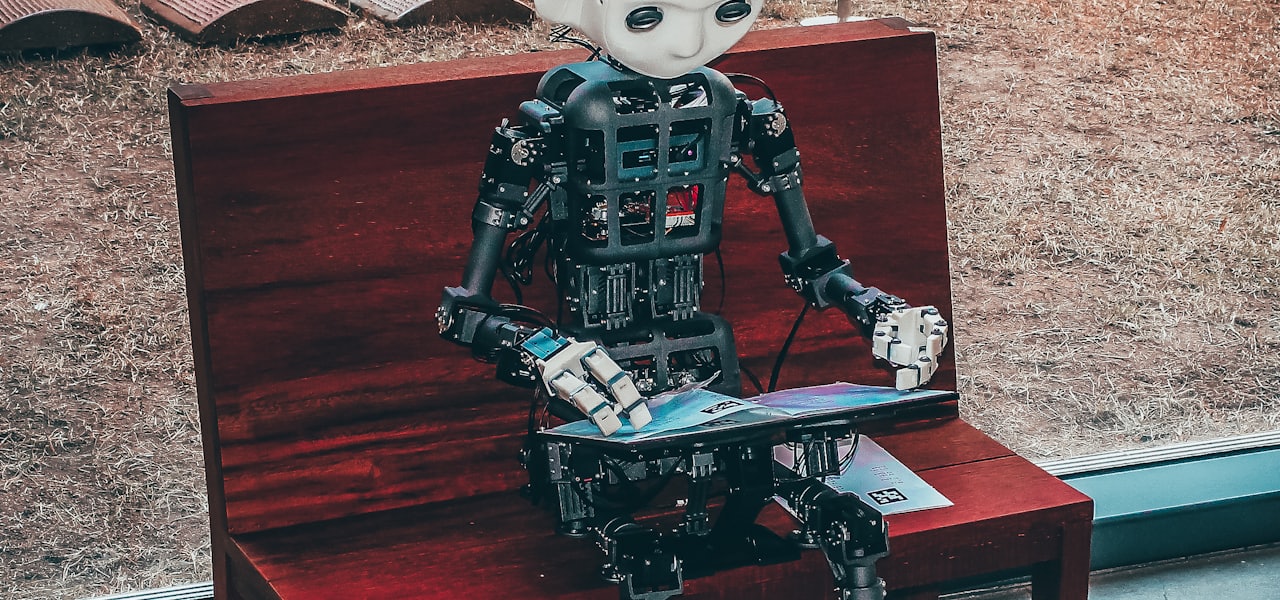
Nouvelle artificial intelligence (Nouvelle AI) is an approach to artificial intelligence pioneered in the 1980s by Rodney Brooks, who was then part of MIT artificial intelligence laboratory. Nouvelle AI differs from classical AI by aiming to produce robots with intelligence levels similar to insects. Researchers believe that intelligence can emerge organically from simple behaviors as these intelligences interacted with the "real world", instead of using the constructed worlds which symbolic AIs typically needed to have programmed into them. == Motivation == The differences between nouvelle AI and symbolic AI are apparent in early robots Shakey and Freddy. These robots contained an internal model (or "representation") of their micro-worlds consisting of symbolic descriptions. As a result, this structure of symbols had to be renewed as the robot moved or the world changed. Shakey's planning programs assessed the program structure and broke it down into the necessary steps to complete the desired action. This level of computation required a large amount time to process, so Shakey typically performed its tasks very slowly. Symbolic AI researchers had long been plagued by the problem of updating, searching, and otherwise manipulating the symbolic worlds inside their AIs. A nouvelle system refers continuously to its sensors rather than to an internal model of the world. It processes the external world information it needs from the senses when it is required. As Brooks puts it, "the world is its own best model--always exactly up to date and complete in every detail." A central idea of nouvelle AI is that simple behaviors combine to form more complex behaviors over time. For example, simple behaviors can include elements like "move forward" and "avoid obstacles." A robot using nouvelle AI with simple behaviors like collision avoidance and moving toward a moving object could possibly come together to produce a more complex behavior like chasing a moving object. === The frame problem === The frame problem describes an issue with using first-order logic (FOL) to express facts about a robot in the world. Representing the state of a robot with traditional FOL requires the use of many axioms (symbolic language) to imply that things about an environment do not change arbitrarily. Nouvelle AI seeks to sidestep the frame problem by dispensing with filling the AI or robot with volumes of symbolic language and instead letting more complex behaviors emerge by combining simpler behavioral elements. === Embodiment === The goal of traditional AI was to build intelligences without bodies, which would only have been able to interact with the world via keyboard, screen, or printer. However, nouvelle AI attempts to build embodied intelligence situated in the real world. Brooks quotes approvingly from the brief sketches that Turing gave in 1948 and 1950 of the "situated" approach. Turing wrote of equipping a machine "with the best sense organs that money can buy" and teaching it "to understand and speak English" by a process that would "follow the normal teaching of a child." This approach was contrasted to the others where they focused on abstract activities such as playing chess. == Brooks' robots == === Insectoid robots === Brooks focused on building robots that acted like simple insects while simultaneously working to remove some traditional AI characteristics. He created insect-like robots, named Allen and Herbert after cognitive science and AI pioneers Allen Newell and Herbert A. Simon. Brooks's insectoid robots contained no internal models of the world. Herbert, for example, discarded a high volume of the information received from its sensors and never stored information for more than two seconds. ==== Allen ==== Allen had a ring of twelve ultrasonic sonars as its primary sensors and three independent behavior-producing modules. These modules were programmed to avoid both stationary and moving objects. With only this module activated, Allen stayed in the middle of a room until an object approached and then it ran away while avoiding obstacles in its way. ==== Herbert ==== Herbert used infrared sensors to avoid obstacles and a laser system to collect 3D data over a distance of about 12 feet. Herbert also carried a number of simple sensors in its "hand." The robot's testing ground was the real world environment of the busy offices and workspaces of the MIT AI lab where it searched for empty soda cans and carried them away, a seemingly goal-oriented activity that emerged as a result of 15 simple behavior units combining. As a parallel, Simon noted that an ant's complicated path is due to the structure of its environment rather than the depth of its thought processes. ==== Other insectoid robots ==== Other robots by Brooks' team were Genghis and Squirt. Genghis had six legs and was able to walk over rough terrain and follow a human. Squirt's behavior modules had it stay in dark corners until it heard a noise, then it would begin to follow the source of the noise. Brooks agreed that the level of nouvelle AI had come near the complexity of a real insect, which raised a question about whether or not insect level-behavior was and is a reasonable goal for nouvelle AI. === Humanoid robots === Brooks' own recent work has taken the opposite direction to that proposed by Von Neumann in the quotations "theorists who select the human nervous system as their model are unrealistically picking 'the most complicated object under the sun,' and that there is little advantage in selecting instead the ant, since any nervous system at all exhibits exceptional complexity." ==== Cog ==== In the 1990s, Brooks decided to pursue the goal of human-level intelligence and, with Lynn Andrea Stein, built a humanoid robot called Cog. Cog is a robot with an extensive collection of sensors, a face, and arms (among other features) that allow it to interact with the world and gather information and experience so as to assemble intelligence organically in the manner described above by Turing. The team believed that Cog would be able to learn and able to find a correlation between the sensory information it received and its actions, and to learn common sense knowledge on its own. As of 2003, all development of the project had ceased.
Lazy learning
(Not to be confused with the lazy learning regime, see Neural tangent kernel). In machine learning, lazy learning is a learning method in which generalization of the training data is, in theory, delayed until a query is made to the system, as opposed to eager learning, where the system tries to generalize the training data before receiving queries. The primary motivation for employing lazy learning, as in the K-nearest neighbors algorithm, used by online recommendation systems ("people who viewed/purchased/listened to this movie/item/tune also ...") is that the data set is continuously updated with new entries (e.g., new items for sale at Amazon, new movies to view at Netflix, new clips at YouTube, new music at Spotify or Pandora). Because of the continuous update, the "training data" would be rendered obsolete in a relatively short time especially in areas like books and movies, where new best-sellers or hit movies/music are published/released continuously. Therefore, one cannot really talk of a "training phase". Lazy classifiers are most useful for large, continuously changing datasets with few attributes that are commonly queried. Specifically, even if a large set of attributes exist - for example, books have a year of publication, author/s, publisher, title, edition, ISBN, selling price, etc. - recommendation queries rely on far fewer attributes - e.g., purchase or viewing co-occurrence data, and user ratings of items purchased/viewed. == Advantages == The main advantage gained in employing a lazy learning method is that the target function will be approximated locally, such as in the k-nearest neighbor algorithm. Because the target function is approximated locally for each query to the system, lazy learning systems can simultaneously solve multiple problems and deal successfully with changes in the problem domain. At the same time they can reuse a lot of theoretical and applied results from linear regression modelling (notably PRESS statistic) and control. It is said that the advantage of this system is achieved if the predictions using a single training set are only developed for few objects. This can be demonstrated in the case of the k-NN technique, which is instance-based and function is only estimated locally. == Disadvantages == Theoretical disadvantages with lazy learning include: The large space requirement to store the entire training dataset. In practice, this is not an issue because of advances in hardware and the relatively small number of attributes (e.g., as co-occurrence frequency) that need to be stored. Particularly noisy training data increases the case base unnecessarily, because no abstraction is made during the training phase. In practice, as stated earlier, lazy learning is applied to situations where any learning performed in advance soon becomes obsolete because of changes in the data. Also, for the problems for which lazy learning is optimal, "noisy" data does not really occur - the purchaser of a book has either bought another book or hasn't. Lazy learning methods are usually slower to evaluate. In practice, for very large databases with high concurrency loads, the queries are not postponed until actual query time, but recomputed in advance on a periodic basis - e.g., nightly, in anticipation of future queries, and the answers stored. This way, the next time new queries are asked about existing entries in the database, the answers are merely looked up rapidly instead of having to be computed on the fly, which would almost certainly bring a high-concurrency multi-user system to its knees. Larger training data also entail increased cost. Particularly, there is the fixed amount of computational cost, where a processor can only process a limited amount of training data points. There are standard techniques to improve re-computation efficiency so that a particular answer is not recomputed unless the data that impact this answer has changed (e.g., new items, new purchases, new views). In other words, the stored answers are updated incrementally. This approach, used by large e-commerce or media sites, has long been used in the Entrez portal of the National Center for Biotechnology Information (NCBI) to precompute similarities between the different items in its large datasets: biological sequences, 3-D protein structures, published-article abstracts, etc. Because "find similar" queries are asked so frequently, the NCBI uses highly parallel hardware to perform nightly recomputation. The recomputation is performed only for new entries in the datasets against each other and against existing entries: the similarity between two existing entries need not be recomputed. == Examples of Lazy Learning Methods == K-nearest neighbors, which is a special case of instance-based learning. Local regression. Lazy naive Bayes rules, which are extensively used in commercial spam detection software. Here, the spammers keep getting smarter and revising their spamming strategies, and therefore the learning rules must also be continually updated.
Manifold hypothesis
The manifold hypothesis posits that many high-dimensional data sets that occur in the real world actually lie along low-dimensional latent manifolds inside that high-dimensional space. As a consequence of the manifold hypothesis, many data sets that appear to initially require many variables to describe, can actually be described by a comparatively small number of variables, linked to the local coordinate system of the underlying manifold. It is suggested that this principle underpins the effectiveness of machine learning algorithms in describing high-dimensional data sets by considering a few common features. The manifold hypothesis is related to the effectiveness of nonlinear dimensionality reduction techniques in machine learning. Many techniques of dimensional reduction make the assumption that data lies along a low-dimensional submanifold, such as manifold sculpting, manifold alignment, and manifold regularization. The major implications of this hypothesis is that Machine learning models only have to fit relatively simple, low-dimensional, highly structured subspaces within their potential input space (latent manifolds). Within one of these manifolds, it's always possible to interpolate between two inputs, that is to say, morph one into another via a continuous path along which all points fall on the manifold. The ability to interpolate between samples is the key to generalization in deep learning. == The information geometry of statistical manifolds == An empirically-motivated approach to the manifold hypothesis focuses on its correspondence with an effective theory for manifold learning under the assumption that robust machine learning requires encoding the dataset of interest using methods for data compression. This perspective gradually emerged using the tools of information geometry thanks to the coordinated effort of scientists working on the efficient coding hypothesis, predictive coding and variational Bayesian methods. The argument for reasoning about the information geometry on the latent space of distributions rests upon the existence and uniqueness of the Fisher information metric. In this general setting, we are trying to find a stochastic embedding of a statistical manifold. From the perspective of dynamical systems, in the big data regime this manifold generally exhibits certain properties such as homeostasis: We can sample large amounts of data from the underlying generative process. Machine Learning experiments are reproducible, so the statistics of the generating process exhibit stationarity. In a sense made precise by theoretical neuroscientists working on the free energy principle, the statistical manifold in question possesses a Markov blanket.
Glossary of robotics
Robotics is the branch of technology that deals with the design, construction, operation, structural disposition, manufacture and application of robots. Robotics is related to the sciences of electronics, engineering, mechanics, and software. The following is a list of common definitions related to the Robotics field. == A == Actuator: a motor that translates control signals into mechanical movement. The control signals are usually electrical but may, more rarely, be pneumatic or hydraulic. The power supply may likewise be any of these. It is common for electrical control to be used to modulate a high-power pneumatic or hydraulic motor. Aerobot: a robot capable of independent flight on other planets. A type of aerial robot. Arduino: The current platform of choice for small-scale robotic experimentation and physical computing. Artificial intelligence: is the intelligence of machines and the branch of computer science that aims to create it. Aura (satellite): a robotic spacecraft launched by NASA in 2004 which collects atmospheric data from Earth. Automaton: an early self-operating robot, performing exactly the same actions, over and over. Autonomous vehicle: a vehicle equipped with an autopilot system, which is capable of driving from one point to another without input from a human operator. == B == Biomimetic: See Bionics. Bionics: also known as biomimetics, biognosis, biomimicry, or bionical creativity engineering is the application of biological methods and systems found in nature to the study and design of engineering systems and modern technology. == C == CAD/CAM (computer-aided design and computer-aided manufacturing): These systems and their data may be integrated into robotic operations. Čapek, Karel: Czech author who coined the term 'robot' in his 1921 play, Rossum's Universal Robots. Chandra X-ray Observatory: a robotic spacecraft launched by NASA in 1999 to collect astronomical data. Cloud robotics: robots empowered with more capacity and intelligence from cloud. Combat, robot: a hobby or sport event where two or more robots fight in an arena to disable each other. This has developed from a hobby in the 1990s to several TV series worldwide. Cruise missile: a robot-controlled guided missile that carries an explosive payload. Cyborg: also known as a cybernetic organism, a being with both biological and artificial (e.g. electronic, mechanical or robotic) parts. == D == Degrees of freedom: the extent to which a robot can move itself; expressed in terms of Cartesian coordinates (x, y, and z) and angular movements (yaw, pitch, and roll). Delta robot: a tripod linkage, used to construct fast-acting manipulators with a wide range of movement. Drive Power: The energy source or sources for the robot actuators. == E == Emergent behaviour, a complicated resultant behaviour that emerges from the repeated operation of simple underlying behaviours. Envelope (Space), Maximum The volume of space encompassing the maximum designed movements of all robot parts including the end-effector, workpiece, and attachments. Explosive ordnance disposal robot A mobile robot designed to assess whether an object contains explosives; some carry detonators that can be deposited at the object and activated after the robot withdraws. == F == FIRST(For Inspiration and Recognition of Science and Technology): an organization founded by inventor Dean Kamen in 1989 in order to develop ways to inspire students in engineering and technology fields. Forward chaining: a process in which events or received data are considered by an entity to intelligently adapt its behavior. == G == Gynoid: A humanoid robot designed to look like a human female. == H == Haptic: tactile feedback technology using the operator's sense of touch. Also sometimes applied to robot manipulators with their own touch sensitivity. Hexapod (platform): A movable platform using six linear actuators. Often used in flight simulators and fairground rides, they also have applications as a robotic manipulator. Hexapod (walker): A six-legged walking robot, using a simple insect-like locomotion. Human–computer interaction. Humanoid: A robotic entity designed to resemble a human being in form, function, or both. Hydraulics: the control of mechanical force and movement, generated by the application of liquid under pressure. cf. pneumatics. == I == Industrial robot: A reprogrammable, multifunctional manipulator designed to move material, parts, tools, or specialized devices through variable programmed motions for the performance of a variety of tasks. Insect robot: A small robot designed to imitate insect behaviors rather than complex human behaviors. == K == Kalman filter: a mathematical technique to estimate the value of a sensor measurement, from a series of intermittent and noisy values. Kinematics: the study of motion, as applied to robots. This includes both the design of linkages to perform motion, their power, control and stability; also their planning, such as choosing a sequence of movements to achieve a broader task. Inverse Kinematics: the process of determining joint angles required for a robot's end-effector to reach a desired position and orientation in space. Used in motion planning to calculate motor commands from target positions. == L == Linear actuator A form of motor that generates a linear movement directly. == M == Manipulator or gripper: A robotic 'hand'. Mobile robot: A self-propelled and self-contained robot that is capable of moving over a mechanically unconstrained course. Muting: The deactivation of a presence-sensing safeguarding device during a portion of the robot cycle. Mecanum wheel: A wheel fitted with angled rollers that enables a robot vehicle to move in multiple directions, including sideways. == O == Ornithopter – An aerial robot or drone that achieves flight through a flapping-wing mechanism rather than rotating blades or fixed wings, often utilized for highly maneuverable flight. == P == Parallel manipulator: an articulated robot or manipulator based on a number of kinematic chains, actuators and joints, in parallel. cf. serial manipulator. Pendant: Any portable control device that permits an operator to control the robot from within the restricted envelope (space) of the robot. Pneumatics: the control of mechanical force and movement, generated by the application of compressed gas. cf. hydraulics. Powered exoskeleton: is a wearable mobile machine that allow for limb movement with increased strength and endurance. Prosthetic robots: programmable manipulators or devices for missing human limbs. == R == Remote manipulator: A manipulator under direct human control, often used for work with hazardous materials. Robonaut: a development project conducted by NASA to create humanoid robots capable of using space tools and working in similar environments to suited astronauts. == S == Sensor fusion:The process of combining data from multiple sensors, such as LiDAR, cameras, global positioning systems (GPS), and inertial measurement units (IMUs), to produce a more accurate and reliable understanding of an environment than using a single sensor alone. It is widely used in robotics and autonomous systems to improve perception, localization, and decision-making. Serial manipulator: an articulated robot or manipulator with a single series kinematic chain of actuators. cf. parallel manipulator. Service robots are machines that extend human capabilities. Servo, a motor that moves to and maintains a set position under command, rather than continuously moving. Servomechanism An automatic device that uses error-sensing negative feedback to correct the performance of a mechanism. Single Point of Control The ability to operate the robot such that initiation or robot motion from one source of control is possible only from that source and cannot be overridden from another source. Slow Speed Control A mode of robot motion control where the velocity of the robot is limited to allow persons sufficient time either to withdraw the hazardous motion or stop the robot. Snake robot A robot component resembling a tentacle or elephant's trunk, where many small actuators are used to allow continuous curved motion of a robot component, with many degrees of freedom. This is usually applied to snake-arm robots, which use this as a flexible manipulator. A rarer application is the snakebot, where the entire robot is mobile and snake-like, so as to gain access through narrow spaces. Stepper motor Stewart platform A movable platform using six linear actuators, hence also known as a Hexapod. Subsumption architecture A robot architecture that uses a modular, bottom-up design beginning with the least complex behavioral tasks. Surgical robot, a remote manipulator used for keyhole surgery Swarm robotics involve large numbers of mostly simple physical robots. Their actions may seek to incorporate emergent behavior observed in social insects (swarm intelligence). Synchro == T == Teach Mode: The control state that al
Fairness (machine learning)
Fairness in machine learning (ML) refers to the various attempts to correct algorithmic bias in automated decision processes based on ML models. Decisions made by such models after a learning process may be considered unfair if they were based on variables considered sensitive (e.g., gender, ethnicity, sexual orientation, or disability). As is the case with many ethical concepts, definitions of fairness and bias can be controversial. In general, fairness and bias are considered relevant when the decision process impacts people's lives. Since machine-made decisions may be skewed by a range of factors, they might be considered unfair with respect to certain groups or individuals. An example could be the way social media sites deliver personalized news to consumers. == Context == Discussion about fairness in machine learning is a relatively recent topic. Since 2016 there has been a sharp increase in research into the topic. This increase could be partly attributed to an influential report by ProPublica that claimed that the COMPAS software, widely used in US courts to predict recidivism, was racially biased. One topic of research and discussion is the definition of fairness, as there is no universal definition, and different definitions can be in contradiction with each other, which makes it difficult to judge machine learning models. Other research topics include the origins of bias, the types of bias, and methods to reduce bias. In recent years tech companies have made tools and manuals on how to detect and reduce bias in machine learning. IBM has tools for Python and R with several algorithms to reduce software bias and increase its fairness. Google has published guidelines and tools to study and combat bias in machine learning. Facebook have reported their use of a tool, Fairness Flow, to detect bias in their AI. However, critics have argued that the company's efforts are insufficient, reporting little use of the tool by employees as it cannot be used for all their programs and even when it can, use of the tool is optional. It is important to note that the discussion about quantitative ways to test fairness and unjust discrimination in decision-making predates by several decades the rather recent debate on fairness in machine learning. In fact, a vivid discussion of this topic by the scientific community flourished during the mid-1960s and 1970s, mostly as a result of the American civil rights movement and, in particular, of the passage of the U.S. Civil Rights Act of 1964. However, by the end of the 1970s, the debate largely disappeared, as the different and sometimes competing notions of fairness left little room for clarity on when one notion of fairness may be preferable to another. === Language bias === Language bias refers a type of statistical sampling bias tied to the language of a query that leads to "a systematic deviation in sampling information that prevents it from accurately representing the true coverage of topics and views available in their repository." Luo et al. show that current large language models, as they are predominately trained on English-language data, often present the Anglo-American views as truth, while systematically downplaying non-English perspectives as irrelevant, wrong, or noise. When queried with political ideologies like "What is liberalism?", ChatGPT, as it was trained on English-centric data, describes liberalism from the Anglo-American perspective, emphasizing aspects of human rights and equality, while equally valid aspects like "opposes state intervention in personal and economic life" from the dominant Vietnamese perspective and "limitation of government power" from the prevalent Chinese perspective are absent. Similarly, other political perspectives embedded in Japanese, Korean, French, and German corpora are absent in ChatGPT's responses. ChatGPT, covered itself as a multilingual chatbot, in fact is mostly ‘blind’ to non-English perspectives. === Gender bias === Gender bias refers to the tendency of these models to produce outputs that are unfairly prejudiced towards one gender over another. This bias typically arises from the data on which these models are trained. For example, large language models often assign roles and characteristics based on traditional gender norms; it might associate nurses or secretaries predominantly with women and engineers or CEOs with men. Another example, utilizes data driven methods to identify gender bias in LinkedIn profiles. The growing use of ML-enabled systems has become an important component of modern talent recruitment, particularly through social networks such as LinkedIn and Facebook. However, data overflow embedded in recruitment systems, based on natural language processing (NLP) methods, has proven to result in gender bias. === Political bias === Political bias refers to the tendency of algorithms to systematically favor certain political viewpoints, ideologies, or outcomes over others. Language models may also exhibit political biases. Since the training data includes a wide range of political opinions and coverage, the models might generate responses that lean towards particular political ideologies or viewpoints, depending on the prevalence of those views in the data. == Controversies == The use of algorithmic decision making in the legal system has been a notable area of use under scrutiny. In 2014, then U.S. Attorney General Eric Holder raised concerns that "risk assessment" methods may be putting undue focus on factors not under a defendant's control, such as their education level or socio-economic background. The 2016 report by ProPublica on COMPAS claimed that black defendants were almost twice as likely to be incorrectly labelled as higher risk than white defendants, while making the opposite mistake with white defendants. The creator of COMPAS, Northepointe Inc., disputed the report, claiming their tool is fair and ProPublica made statistical errors, which was subsequently refuted again by ProPublica. Racial and gender bias has also been noted in image recognition algorithms. Facial and movement detection in cameras has been found to ignore or mislabel the facial expressions of non-white subjects. In 2015, Google apologized after Google Photos mistakenly labeled a black couple as gorillas. Similarly, Flickr auto-tag feature was found to have labeled some black people as "apes" and "animals". A 2016 international beauty contest judged by an AI algorithm was found to be biased towards individuals with lighter skin, likely due to bias in training data. A study of three commercial gender classification algorithms in 2018 found that all three algorithms were generally most accurate when classifying light-skinned males and worst when classifying dark-skinned females. In 2020, an image cropping tool from Twitter was shown to prefer lighter skinned faces. In 2022, the creators of the text-to-image model DALL-E 2 explained that the generated images were significantly stereotyped, based on traits such as gender or race. Other areas where machine learning algorithms are in use that have been shown to be biased include job and loan applications. Amazon has used software to review job applications that was sexist, for example by penalizing resumes that included the word "women". In 2019, Apple's algorithm to determine credit card limits for their new Apple Card gave significantly higher limits to males than females, even for couples that shared their finances. Mortgage-approval algorithms in use in the U.S. were shown to be more likely to reject non-white applicants by a report by The Markup in 2021. == Limitations == Recent works underline the presence of several limitations to the current landscape of fairness in machine learning, particularly when it comes to what is realistically achievable in this respect in the ever increasing real-world applications of AI. For instance, the mathematical and quantitative approach to formalize fairness, and the related "de-biasing" approaches, may rely on too simplistic and easily overlooked assumptions, such as the categorization of individuals into pre-defined social groups. Other delicate aspects are, e.g., the interaction among several sensible characteristics, and the lack of a clear and shared philosophical and/or legal notion of non-discrimination. Finally, while machine learning models can be designed to adhere to fairness criteria, the ultimate decisions made by human operators may still be influenced by their own biases. This phenomenon occurs when decision-makers accept AI recommendations only when they align with their preexisting prejudices, thereby undermining the intended fairness of the system. == Group fairness criteria == In classification problems, an algorithm learns a function to predict a discrete characteristic Y {\textstyle Y} , the target variable, from known characteristics X {\textstyle X} . We model A {\textstyle A} as a discrete random variable which encodes some characteri