Looking for the best AI sales assistant? An AI sales assistant is software that uses machine learning to help you get more done — it can save you hours every week by automating repetitive work. Most options offer a generous free tier, with paid plans unlocking higher limits, faster processing, and team features. Whether you are a beginner or a pro, the right AI sales assistant slots into your workflow and pays for itself fast. This guide breaks down the top picks, their pros and cons, and who each one is best for.
SAP NetWeaver Visual Composer
SAP NetWeaver Visual Composer is SAP’s web-based software modelling tool. It enables business process specialists and developers to create business application components, without coding. Visual Composer produces applications in a declarative form, enabling code-free execution mode for multiple runtime environments. It provides application lifecycle support by maintaining the connection between an application and its model throughout its lifecycle. Visual Composer is designed with an open architecture, which enables developers to extend its design-time environment and modelling language, as well as to integrate external data services. The tool aims to increase productivity by reducing development effort time, and narrowing the gap between application definition and implementation. Starting with a blank canvas, the Visual Composer user, typically a business process specialist, draws the application in Visual Composer Storyboard (workspace), without writing code, to prototype, design and produce applications. A typical workflow for creating, deploying and running an application using Visual Composer is: Create a model Discover data services and add them to the model Select necessary UI elements and add them to the model Connect model elements to define the model logic and data flow Edit the layout Arranging the UI elements and the controls of the application on forms and tables. Deploy the model This step includes compilation, validation and deployment to a selected environment. Run the application The application can run using different runtime environment (such as Adobe Flex and HTML). In 2014 a runtime environment was introduced that is utilizing HTML5 capabilities of SAPUI5.
Luma (video)
In video, luma ( Y ′ {\displaystyle Y'} ) represents the brightness in an image (the "black-and-white" or achromatic portion of the image). Luma is typically paired with chroma. Luma represents the achromatic image, while the chroma components represent the color information. Converting R′G′B′ sources (such as the output of a three-CCD camera) into luma and chroma allows for chroma subsampling: because human vision has finer spatial sensitivity to luminance ("black and white") differences than chromatic differences, video systems can store and transmit chromatic information at lower resolution, optimizing perceived detail at a particular bandwidth. == Luma versus relative luminance == Luma is the weighted sum of gamma-compressed R′G′B′ components of a color video—the prime symbols ′ denote gamma compression. The word was proposed to prevent confusion between luma as implemented in video engineering and relative luminance as used in color science (i.e. as defined by CIE). Relative luminance is formed as a weighted sum of linear RGB components, not gamma-compressed ones. Even so, luma is sometimes erroneously called luminance. SMPTE EG 28 recommends the symbol Y ′ {\displaystyle Y'} to denote luma and the symbol Y {\displaystyle Y} to denote relative luminance. === Use of relative luminance === While luma is more often encountered, relative luminance is sometimes used in video engineering when referring to the brightness of a monitor. The formula used to calculate relative luminance uses coefficients based on the CIE color matching functions and the relevant standard chromaticities of red, green, and blue (e.g., the original NTSC primaries, SMPTE C, or Rec. 709). For the Rec. 709 (and sRGB) primaries, the linear combination, based on pure colorimetric considerations and the definition of relative luminance is: Y = 0.2126 R + 0.7152 G + 0.0722 B {\displaystyle Y=0.2126R+0.7152G+0.0722B} The formula used to calculate luma in the Rec. 709 spec arbitrarily also uses these same coefficients, but with gamma-compressed components: Y ′ = 0.2126 R ′ + 0.7152 G ′ + 0.0722 B ′ , {\displaystyle Y'=0.2126R'+0.7152G'+0.0722B',} where the prime symbol ′ denotes gamma compression. == Rec. 601 luma versus Rec. 709 luma coefficients == For digital formats following CCIR 601 (i.e. most digital standard definition formats), luma is calculated with this formula: Y 601 ′ = 0.299 R ′ + 0.587 G ′ + 0.114 B ′ {\displaystyle Y'_{\text{601}}=0.299R'+0.587G'+0.114B'} Formats following ITU-R Recommendation BT. 709 (i.e. most digital high definition formats) use a different formula: Y 709 ′ = 0.2126 R ′ + 0.7152 G ′ + 0.0722 B ′ {\displaystyle Y'_{\text{709}}=0.2126R'+0.7152G'+0.0722B'} Modern HDTV systems use the 709 coefficients, while transitional 1035i HDTV (MUSE) formats may use the SMPTE 240M coefficients: Y 240 ′ = 0.212 R ′ + 0.701 G ′ + 0.087 B ′ = Y 145 ′ {\displaystyle Y'_{\text{240}}=0.212R'+0.701G'+0.087B'=Y'_{\text{145}}} These coefficients correspond to the SMPTE RP 145 primaries (also known as "SMPTE C") in use at the time the standard was created. The change in the luma coefficients is to provide the "theoretically correct" coefficients that reflect the corresponding standard chromaticities ('colors') of the primaries red, green, and blue. However, there is some controversy regarding this decision. The difference in luma coefficients requires that component signals must be converted between Rec. 601 and Rec. 709 to provide accurate colors. In consumer equipment, the matrix required to perform this conversion may be omitted (to reduce cost), resulting in inaccurate color. == Luma and luminance errors == As well, the Rec. 709 luma coefficients may not necessarily provide better performance. Because of the difference between luma and relative luminance, luma does not exactly represent the luminance in an image. As a result, errors in chroma can affect luminance. Luma alone does not perfectly represent luminance; accurate luminance requires both accurate luma and chroma. Hence, errors in chroma "bleed" into the luminance of an image. Note the bleeding in lightness near the borders. Due to the widespread usage of chroma subsampling, errors in chroma typically occur when it is lowered in resolution/bandwidth. This lowered bandwidth, coupled with high frequency chroma components, can cause visible errors in luminance. An example of a high frequency chroma component would be the line between the green and magenta bars of the SMPTE color bars test pattern. Error in luminance can be seen as a dark band that occurs in this area.
Comparison of raster graphics editors
Raster graphics editors can be compared by many variables, including availability. == List == == General information == Basic general information about the editor: creator, company, license, etc. == Operating system support == The operating systems on which the editors can run natively, that is, without emulation, virtual machines or compatibility layers. In other words, the software must be specifically coded for the operation system; for example, Adobe Photoshop for Windows running on Linux with Wine does not fit. == Features == == Color spaces == == File support ==
Oculus Medium
Oculus Medium is a digital sculpting software that works with virtual reality headsets and 6DoF motion controllers. It is used to create and paint digital sculptures. Medium works only on Oculus Rift. It was released on December 5, 2016, following with a major update in 2018 introducing new features and a revamped UI. On December 9, 2019, Oculus Medium was acquired by Adobe and re-named to "Medium by Adobe".
Bitstrips
Bitstrips, Inc. was a Canadian media and technology company based in Toronto, founded in 2007 by Jacob Blackstock, David Kennedy, Shahan Panth, Dorian Baldwin, and Jesse Brown. The company created and offered a web application, Bitstrips.com, which allowed users to create comic strips using personalized avatars, and preset templates and poses. Brown and Blackstock explained that the service was meant to enable self-expression without the need to have artistic skills. Bitstrips was first presented in 2008 at South by Southwest in Austin, Texas, and the service later piloted and launched a version designed for use as educational software. The service achieved increasing prominence following the launch of versions for Facebook and mobile platforms. In 2014, Bitstrips launched a spin-off app known as Bitmoji, which allows users to create personalized stickers for use in instant messaging. In July 2016, Snapchat Inc. announced that it had acquired the company; the Bitstrips comic service was shut down, but Bitmoji remains operational, and has subsequently been given greater prominence within Snapchat's overall platform. == History == Bitstrips was co-developed by Toronto-based comic artist Jacob Blackstock and his high school friend, journalist Jesse Brown. The service was originally envisioned as a means to allow anyone to create their own comic strip without needing artistic skills. Brown explained that "it's so difficult and time-consuming to tell a story in comic book form, drawing the same characters again and again in these tiny little panels, and just the amount of craftsmanship required. And even if you can do it well, which I never could, it takes years to make a story." Brown stated that the service would be "groundwork for a whole new way to communicate", and went as far as describing the service as being a "YouTube for comics". Blackstock explained that the concept of Bitstrips was influenced by his own use of comics as a form of socialization; a student, Blackstock and his friends drew comics featuring each other and shared them during classes. He felt that Bitstrips was a "medium for self-expression", stating that "It's not just about you making the comics, but since you and your friends star in these comics, it's like you're the medium. The visual nature of comics just speaks so much louder than text." The service was publicly unveiled at South by Southwest in 2008. In 2009, the service introduced a version oriented towards the educational market, Bitstrips for Schools, which was initially piloted at a number of schools in Ontario. The service was praised by educators for being engaging to students, especially within language classes. Brown noted that students were using the service to create comics outside of class as well, stating that it was "so gratifying and shocking what people do with your tool to make their own stories in ways that you never would have anticipated. Some of them are just brilliant." In December 2012, Bitstrips launched a version for Facebook; by July 2013, Bitstrips had 10 million unique users on Facebook, having created over 50 million comics. In October 2013, Bitstrips launched a mobile app; in two months, Bitstrips became a top-downloaded app in 40 countries, and over 30 million avatars had been created with it. In November 2013, Bitstrips secured a round of funding from Horizons Ventures and Li Ka-shing. In October 2014, Bitstrips launched Bitmoji, a spin-off app that allows users to create stickers featuring Bitstrips characters in various templates. In July 2016, following unconfirmed reports earlier in the year, Snapchat Inc. announced that it had acquired Bitstrips. The company's staff continue to operate out of Toronto, but the original Bitstrips comic service was shut down in favour of focusing exclusively on Bitmoji, leaving many Bitstrips users to call for a reboot of the comic service.
Frankenstein complex
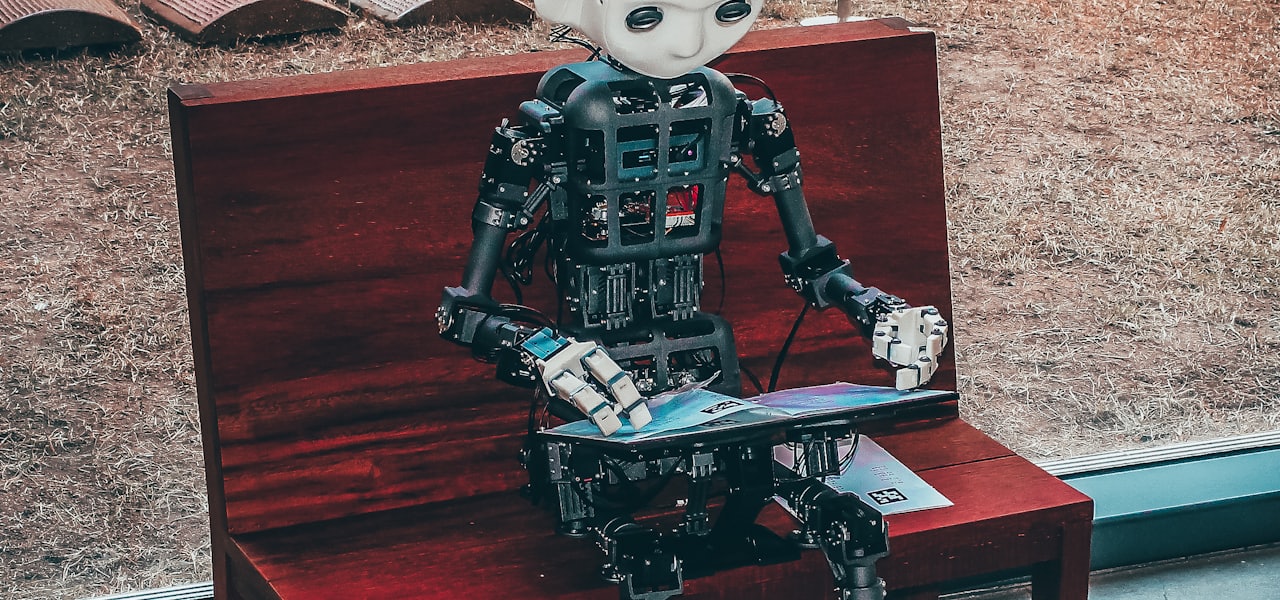
The Frankenstein complex is a term coined by Isaac Asimov in his robot series, referring to the fear of mechanical men. == History == Some of Asimov's science fiction short stories and novels predict that this suspicion will become strongest and most widespread in respect of "mechanical men" that most-closely resemble human beings (see android), but it is also present on a lower level against robots that are plainly electromechanical automatons. The "Frankenstein complex" is similar in many respects to Masahiro Mori's uncanny valley hypothesis. The name, "Frankenstein complex", is derived from the name of Victor Frankenstein in the 1818 novel Frankenstein; or, The Modern Prometheus by Mary Shelley. In Shelley's story, Frankenstein created an intelligent, somewhat superhuman being, but he finds that his creation is horrifying to behold and abandons it. This ultimately leads to Victor's death at the conclusion of a vendetta between himself and his creation. In much of his fiction, Asimov depicts the general attitude of the public towards robots as negative, with ordinary people fearing that robots will either replace them or dominate them, although dominance would not be allowed under the specifications of the Three Laws of Robotics, the first of which is: "A robot may not harm a human being or, through inaction, allow a human being to come to harm." However, Asimov's fictitious earthly public is not fully persuaded by this, and remains largely suspicious and fearful of robots. I, Robot's short story "Little Lost Robot" is about this "fear of robots". In Asimov's robot novels, the Frankenstein complex is a major problem for roboticists and robot manufacturers. They do all they can to reassure the public that robots are harmless, even though this sometimes involves hiding the truth because they think that the public would misunderstand it. The fear by the public and the response of the manufacturers is an example of the theme of paternalism, the dread of paternalism, and the conflicts that arise from it in Asimov's fiction. The same theme occurs in many later works of fiction featuring robots, although it is rarely referred to as such.